
All-on-4® & Implant-Retained Overdenture Treatment Risks
Dental implant treatment can be a significant step towards replacing missing or failing teeth. But, like any surgical or restorative dental treatment, it carries risks.
At Next Smile Australia, your treatment is planned around your individual dental and medical circumstances. Your dentist will assess factors such as your existing teeth and bone, gum health, bite, general health and lifestyle before recommending a treatment approach.
While careful planning can help identify and manage potential risks, no dental treatment can be guaranteed to be free from complications or to last for a particular length of time.
Before deciding whether implant treatment is right for you, your dentist should explain the potential risks, expected recovery, ongoing maintenance and any alternative treatment options relevant to your circumstances.
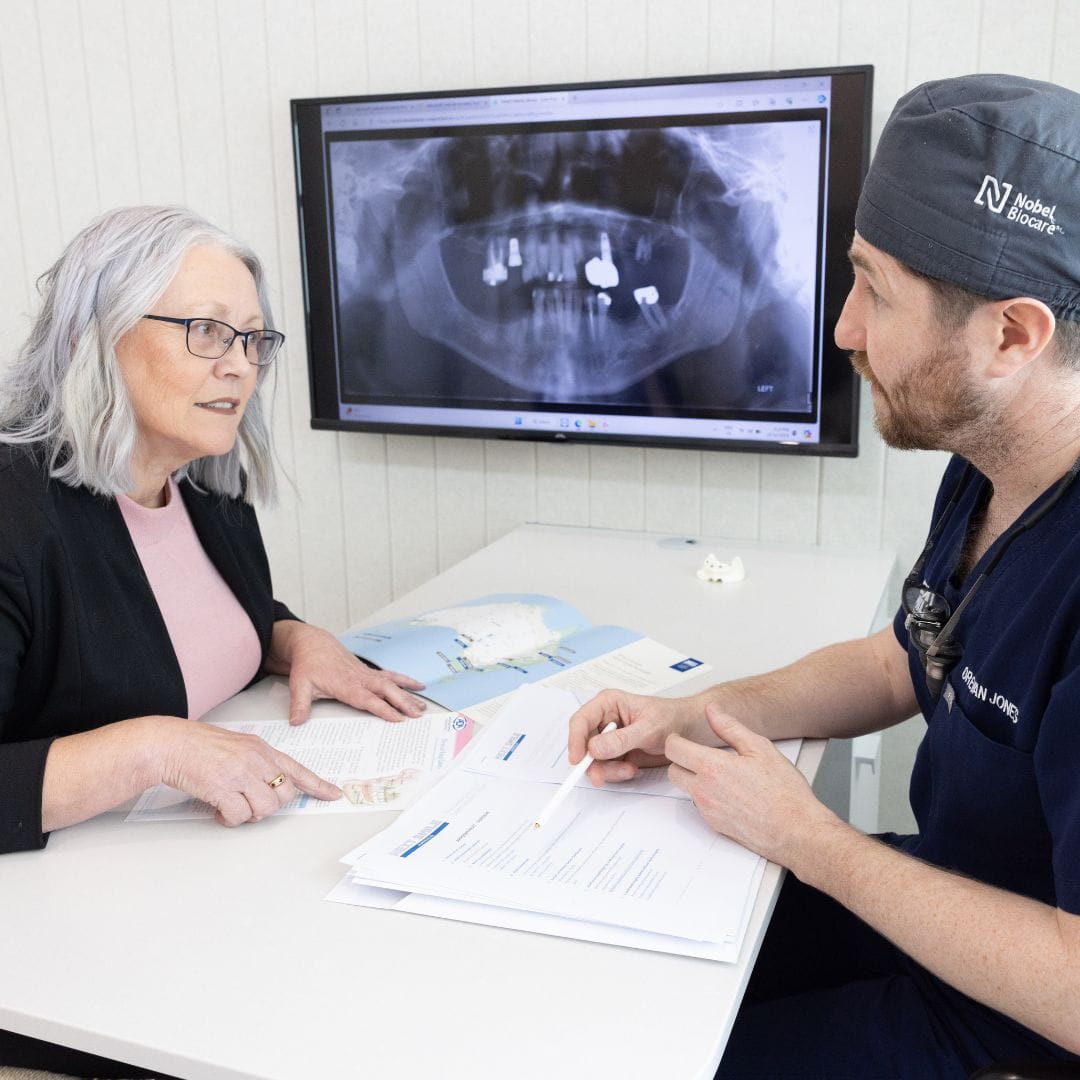
What are the risks of All-on-4® and implant-retained overdentures?
The risks vary depending on the treatment you are having and your individual circumstances.
All-on-4® dental implant uses four implants to support a fixed full-arch prosthesis. In some cases, additional implants may be recommended depending on the treatment plan.
Implant retained overdentures are removable dental prosthetic that attaches securely to two to four dental implants. These implants act as strong anchors, allowing the denture to “clip” into place – which is why overdentures are sometimes referred to as clip-in or Snap-on dentures.
Both treatments involve implant surgery and carry some risks associated with surgery, healing, the implants themselves and the prosthesis they support.
Surgical risks
Dental implant surgery can involve risks such as:
- Bleeding, swelling, bruising, pain or discomfort
- Infection or delayed healing
- Damage to nearby teeth, bone, nerves or other structures
- Changes in sensation, depending on the location of the implants
- Inadequate implant stability
- Damage to or involvement of the sinus in some upper-jaw cases
- Jawbone fracture or other surgical complications
- The need for additional treatment if complications occur
- Risks associated with sedation or general anaesthesia, where used
Your dentist will discuss the risks relevant to your particular treatment and whether additional precautions or treatment may be required.
Risks involving nerves
Some implants, particularly in the lower jaw, may be placed near nerves that provide sensation to the lips, chin and tongue.
Surgery or post-operative swelling can sometimes affect these nerves, resulting in altered sensation, numbness, tingling or other changes.
In many cases, nerve-related changes improve with time. However, there is a possibility that altered sensation may persist or, rarely, be permanent.
Your dentist will assess your anatomy during treatment planning and discuss any specific nerve-related risks that apply to you.
Risks involving the sinuses
The upper jaw can present different challenges because of the position of the sinuses and the amount and quality of available bone.
Depending on your anatomy, implant placement may occur close to the sinus. In some cases, the sinus may be entered or perforated during treatment.
Additional treatment may sometimes be required to manage a sinus-related complication or to create suitable conditions for implant placement.
Where there is insufficient bone, procedures such as bone grafting or a sinus lift may be considered. These procedures have their own risks, costs and recovery requirements and will be discussed with you if they are relevant to your treatment.
Implant failure
Dental implants do not always integrate with the surrounding bone.
An implant may fail to achieve the required stability during healing, or an implant that has previously integrated may later develop problems.
If an implant fails, it may need to be removed. Depending on your circumstances, further healing, additional procedures or replacement of the implant may be required.
For All-on-4® treatment, implant failure can also affect the stability or function of the full-arch prosthesis and may require changes to the treatment plan.
For implant-retained overdentures, failure of an implant may affect the retention or stability of the denture and may require modification or replacement of components or further treatment.
Your temporary teeth and immediate loading
In suitable cases, implants may be connected to a temporary fixed prosthesis soon after implant placement.
However, this is dependent on factors including implant stability, bone quality and your individual circumstances.
Sometimes the implants do not have sufficient stability for immediate loading. If this occurs, your dentist may recommend allowing the implants to heal before attaching a fixed prosthesis.
This may mean using a temporary removable appliance during the healing period instead.
Your dentist will discuss what is appropriate for your circumstances.
Risks to the prosthesis
Implants are only part of your treatment. The teeth or denture attached to them can also experience complications over time.
Depending on the type of treatment, these may include:
- Chipping, cracking or fracture of prosthetic teeth or materials
- Wear of the teeth
- Loosening or damage of screws or other components
- Changes to the fit or function of the prosthesis
- Food becoming trapped around the prosthesis or implants
- Difficulty cleaning around the implants
- Changes in speech or pronunciation
- Changes in your bite
- The need for adjustment, repair, relining or replacement
- Damage caused by excessive biting forces, grinding or clenching
Prosthetic teeth and components are not permanent and may require maintenance or replacement over time.
Gum and implant health
The tissues around implants can become inflamed or infected.
Poor oral hygiene, smoking, previous gum disease, certain medical conditions and other factors may increase the risk of complications around implants.
Inflammation around an implant can affect the surrounding tissues and, in more advanced cases, contribute to loss of supporting bone.
Good daily cleaning and regular professional maintenance are important for monitoring your implants, gums and prosthesis.
Your dentist will recommend an individual maintenance schedule based on your treatment and oral health.
Smoking and lifestyle factors
Smoking can affect healing and increase the risk of complications following implant surgery.
Your dentist may recommend stopping or reducing smoking before and after treatment, depending on your circumstances.
Other factors can also affect healing and treatment outcomes, including oral hygiene, general health, medications, nutrition, teeth grinding or clenching and how closely post-treatment instructions are followed.
Your dentist will discuss any factors that may be relevant to you before treatment.
Even though the denture is supported by implants, it still needs to be removed and cleaned as directed by your dental team.
Recovery after implant surgery
Some swelling, bruising, bleeding, pain and discomfort can be expected after implant surgery.
The amount and duration of these symptoms vary between individuals and depend on the treatment performed.
You may feel tired following surgery and may need to modify your normal activities while you recover. Your dental team will provide specific instructions about eating, oral hygiene, physical activity, medication and returning to work.
Recovery is different for everyone. Your dentist will explain what to expect based on the treatment you are having.
If you experience symptoms that concern you or do not appear to be improving as expected, contact your dental team promptly.
Long-term maintenance matters
Implant treatment does not mean you no longer need ongoing dental care.
Regular appointments allow your dental team to monitor:
- The health of your gums and tissues around the implants
- The stability and condition of your implants
- Your bite
- Your prosthesis and its components
- Your ability to keep the area clean
- Any signs of wear, loosening or other complications
Your maintenance appointments may need to continue at regular intervals for as long as you have your implants and prosthesis.
Additional maintenance, repairs, replacement components or prosthetic replacement may involve costs beyond your initial treatment.
Even though the denture is supported by implants, it still needs to be removed and cleaned as directed by your dental team.
Additional procedures may be required
Your initial treatment plan may need to change depending on what is found during treatment or how your body responds.
Additional procedures may sometimes be required, including:
- Bone grafting
- Sinus-related procedures
- Implant removal or replacement
- Treatment for infection or inflammation
- Prosthetic repairs or adjustments
- Replacement of prosthetic teeth or components
These procedures may involve additional treatment time, recovery and costs. Your dentist will discuss any additional treatment recommended for your circumstances.
Your treatment is individual
There is no single treatment approach that is suitable for everyone.
Your dentist will assess your individual circumstances and discuss the potential benefits, limitations, risks and alternatives of the available options with you.
Depending on your situation, alternatives may include conventional dentures, implant-retained overdentures, individual dental implants, bridges or other treatment options.
You are encouraged to ask questions and take the time you need to understand your options before deciding to proceed. You may also wish to seek a second opinion from another appropriately qualified dental practitioner.
Before you proceed
Implant treatment is elective in many circumstances, and choosing not to proceed is also an option.
Your consultation should give you an opportunity to understand:
- What treatment is being proposed and why
- The expected stages of treatment
- The potential risks and complications
- Your expected recovery
- The ongoing maintenance involved
- Potential additional procedures
- The likely costs, including possible future maintenance
- Alternative treatment options
Your dentist will discuss these considerations with you and obtain your informed consent before treatment proceeds.
Important: This information is general in nature and does not replace a consultation, examination or personalised advice from a registered dental practitioner. Risks vary between individuals and procedures. Your treating practitioner will discuss the risks, benefits, limitations and alternatives relevant to your circumstances before treatment.
Treatment You Can Trust.
Wherever You Live.
With 7 Super Clinics across Australia and a network of accredited regional partners, reliable dental implant care is always within reach. From your first consultation to lifelong aftercare, our coordinated network delivers complete implant solutions – all under one roof.
Take the first step toward your Next Smile
Our highly experienced consultation teams offer a warm, caring and non-judgemental approach to assessing your suitability for All-on-4® Dental Implants.
If you’d like to schedule a personal consultation, please get in touch